May 16, 2026 · ForeclosedBahay Editorial
What's the Real Cost of Buying Foreclosed Property Beyond the Price Tag?
What's the Real Cost of Buying Foreclosed Property Beyond the Price Tag?
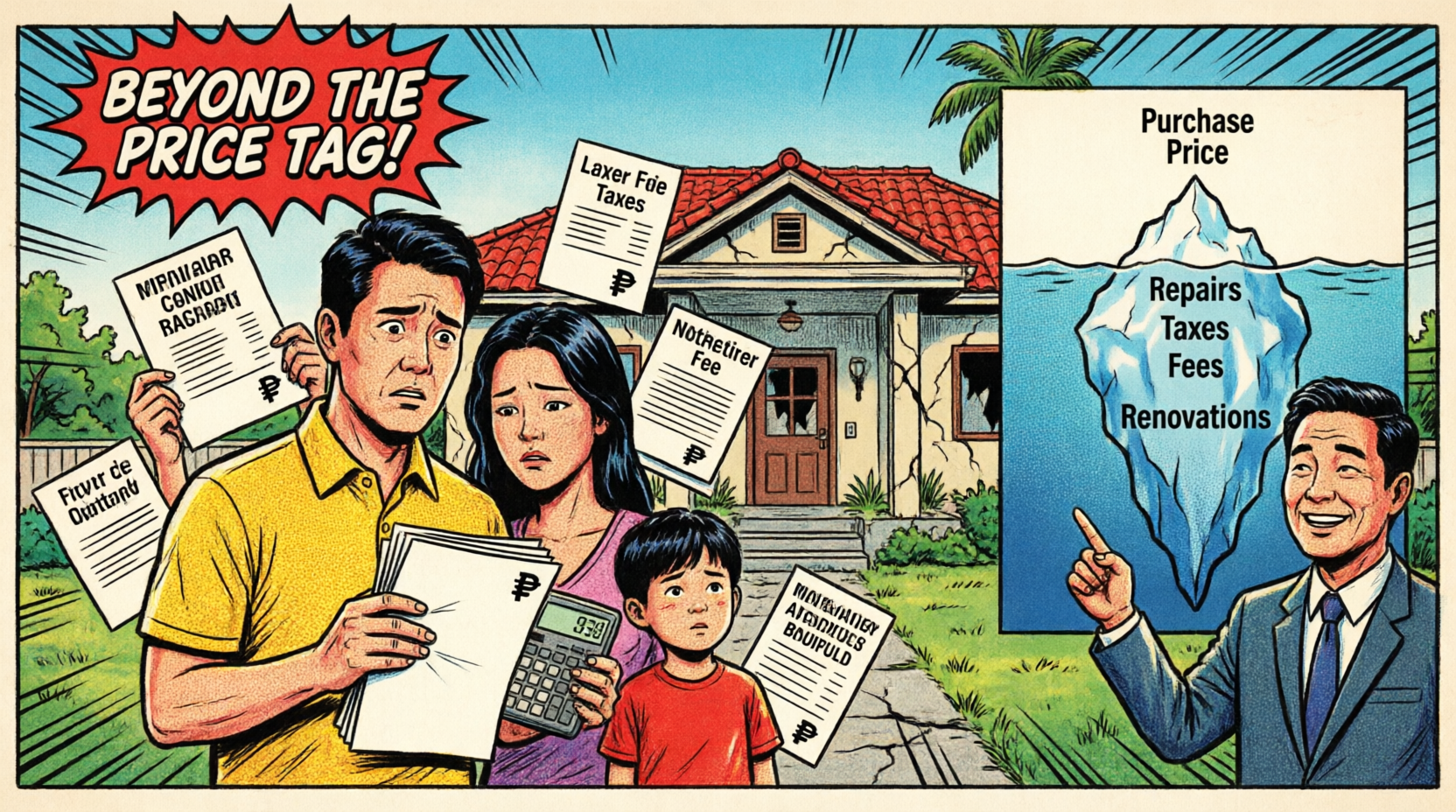
So you've been browsing bank foreclosed properties and spotted what looks like a steal — a house and lot in Cavite listed at ₱1.2 million, or a condo unit in Quezon City going for half its market value. Before you get too excited, let's talk honestly. The listed price is just the beginning. Knowing the hidden costs of foreclosed property in the Philippines is what separates a smart investment from a financial headache.
This guide breaks down every peso you should realistically budget for so you can walk into that purchase with eyes wide open.
The Purchase Price Is Just the Starting Line
Banks like BDO, BPI, Metrobank, PNB, and UCPB regularly sell foreclosed properties at discounts — sometimes 20% to 40% below market value. That discount is real, but the total cost of buying a foreclosed property in the Philippines has several layers that most first-time buyers don't see coming.
Think of the listed price as your entry ticket. What follows are the actual costs of getting inside.
1. Transfer Taxes and Government Fees
Once you agree on a price, the government wants its share. Here's what you'll typically need to settle:
- Capital Gains Tax (CGT): 6% of the selling price or zonal value, whichever is higher. The bank usually pays this, but some banks pass it on to the buyer — always check the terms.
- Documentary Stamp Tax (DST): 1.5% of the selling price or zonal value. This one is more commonly charged to the buyer.
- Transfer Tax: Ranges from 0.5% to 0.75% depending on whether the property is in a city or municipality. Paid to the local government unit (LGU).
- Registration Fee: Paid to the Registry of Deeds. This varies by property value but can run from ₱8,000 to ₱30,000 or more.
- Notarial Fees: For the Deed of Absolute Sale, expect to pay around ₱2,000 to ₱5,000.
On a ₱1.2 million property, these fees alone can add up to ₱80,000 to ₱150,000. That's not pocket change.
2. Back Taxes and Unpaid Association Dues
This is where many buyers get a nasty surprise. Foreclosed properties often carry unpaid real property taxes (RPT) built up over the years the previous owner stopped paying. Depending on how long the property sat in foreclosure, you could be looking at several years of arrears — plus penalties and surcharges.
For example, a property in Bulacan with ₱8,000 annual RPT that's been delinquent for five years could carry over ₱50,000 in tax liabilities — before you even move in.
If the property is inside a subdivision or condominium, unpaid homeowners' association (HOA) dues or condo association dues can also be staggering. Some banks absorb these costs; many don't. Read the contract carefully. When in doubt, ask the bank directly — BPI Family and BDO, for instance, have asset disposal teams that can tell you exactly which liabilities are included or excluded.
3. Renovation and Repair Costs
Foreclosed properties are sold "as is, where is." That phrase should put you on alert. The previous owner may have stopped maintaining the property months or even years before the bank took possession. You might walk in and find:
- Broken plumbing and water damage
- Damaged electrical wiring
- Missing fixtures, tiles, or even doors
- Pest infestations
- Structural issues like cracks or roof leaks
In some cases, frustrated former owners deliberately damage the property before leaving. Budget conservatively: minor repairs for a townhouse might cost ₱50,000 to ₱150,000. A more distressed property could need ₱300,000 or more in full renovation. Always do an ocular inspection before signing anything — and if possible, bring a licensed engineer or contractor with you.
4. Occupancy Issues and Legal Costs
This is one of the most overlooked hidden costs of foreclosed property in the Philippines. Some properties still have occupants — either the original owners who refuse to leave or informal settlers. Eviction is a legal process in the Philippines and it takes time and money.
Hiring a lawyer to handle ejectment proceedings can cost ₱30,000 to ₱100,000 or more, depending on how contested the case gets. Some buyers have waited 12 to 18 months before gaining actual possession of a property they already paid for. Ask the bank about the occupancy status before you fall in love with the listing.
5. Financing Costs (If You're Getting a Loan)
If you're not paying full cash, financing adds another layer of cost. Banks that sell foreclosed properties — like Metrobank's MBTC REM Corp or BDO's in-house installment programs — may offer special financing terms, but interest rates still apply.
- Interest rates for bank financing on foreclosed properties typically run from 6% to 9% per annum, depending on the term and the bank's current rates.
- Processing fees and appraisal fees can add another ₱5,000 to ₱15,000.
- If you're going through Pag-IBIG, expect mortgage redemption insurance (MRI) and fire insurance premiums on top of that.
6. Moving and Immediate Setup Costs
Don't forget the basics: utilities reconnection fees (Meralco reconnection alone can cost a few thousand pesos), water service connection, internet installation, and the cost of furnishing and securing the property. If the property needs new gate locks, grills, or perimeter fencing, add those to your list too.
So What's the Real Total Cost?
Here's a simple example. Say you're buying a foreclosed house and lot in Laguna listed at ₱1,500,000:
- Purchase price: ₱1,500,000
- Transfer taxes and fees: ₱100,000 – ₱180,000
- Back real property taxes: ₱30,000 – ₱80,000
- Repairs and renovation: ₱100,000 – ₱300,000
- Legal fees (if needed): ₱0 – ₱80,000
- Financing costs (if applicable): Variable
- Move-in setup: ₱20,000 – ₱50,000
Realistic total: ₱1,750,000 to ₱2,200,000 — or more.
That can still be a good deal compared to market value, but it's a very different number from what was on the listing.
Practical Tips to Protect Your Budget
- Request a full disclosure from the bank on what liabilities are included or transferred to you before signing.
- Check the BIR zonal value of the property — it affects how much CGT and DST will be computed.
Browse Foreclosed Properties
Search thousands of listings from BDO, BPI, Metrobank, and more.
Browse All Listings →More Articles
-
What's the Process of Buying Foreclosed Property Step by Step?
May 17, 2026
-
How to Avoid Scams When Buying Foreclosed Property Online
May 16, 2026
-
What Documents Do You Need to Buy a Foreclosed Property?
May 16, 2026
-
Can Foreigners and OFWs Buy Foreclosed Properties in the Philippines?
May 16, 2026