May 17, 2026 · ForeclosedBahay Editorial
What's the Process of Buying Foreclosed Property Step by Step?
What's the Process of Buying Foreclosed Property Step by Step?
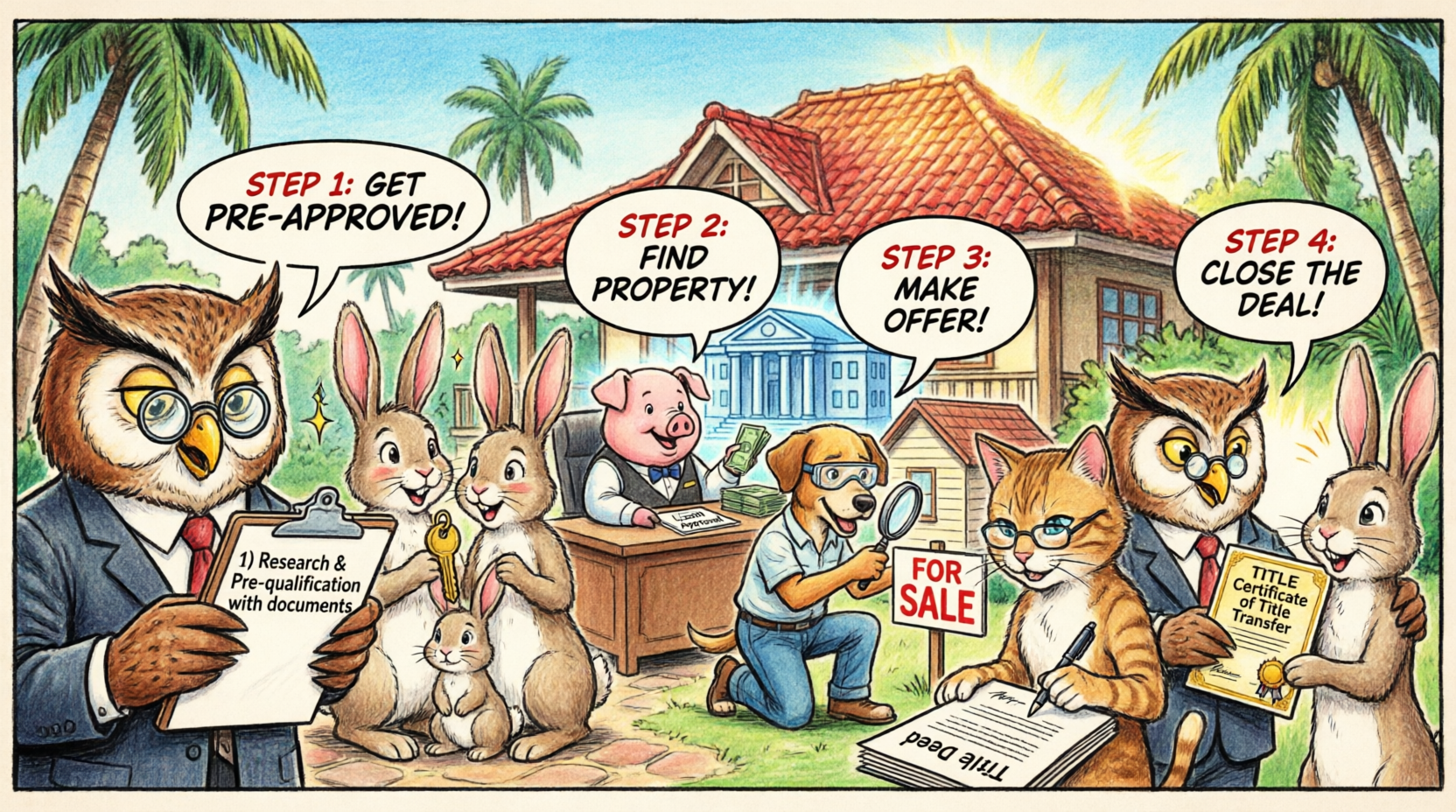
Buying a foreclosed property in the Philippines can be one of the smartest real estate moves you'll ever make — if you know what you're doing. Banks like BDO, BPI, Metrobank, and PNB regularly sell acquired assets at prices 20% to 40% below market value. But the process is different from buying a brand-new condo or a resale house, and going in without a plan can cost you time, money, and a lot of frustration.
This guide walks you through the buying foreclosed property process in the Philippines, step by step, so you know exactly what to expect from the moment you find a listing to the day you get the keys.
Step 1: Set Your Budget and Get Pre-Qualified
Before anything else, be honest about your finances. Foreclosed properties in the Philippines are typically sold on a cash basis or through in-house bank financing. Some banks offer special housing loan packages for their own acquired assets, which can be convenient, but you still need to know how much you can realistically afford.
If you're planning to use a home loan, check your eligibility with Pag-IBIG, the selling bank itself, or another lender. Getting a pre-qualification letter gives you a clearer budget and shows the bank you're a serious buyer.
Practical tip: Factor in costs beyond the purchase price — transfer taxes, documentary stamps, registration fees, and any unpaid real property taxes or association dues the property may have accumulated. These can add 5% to 10% on top of the listed price.
Step 2: Search for Available Listings
Banks in the Philippines publish their foreclosed and acquired assets through several channels. BDO lists properties under their "Acquired Assets" section, BPI has their "Foreclosed Properties" page, and Metrobank, PNB, Landbank, and RCBC all maintain their own property directories online.
The problem is that listings are scattered across different websites, formats, and update schedules. That's exactly why platforms like ForeclosedBahay.com exist — to pull these listings into one place so you can search by location, price range, and property type without jumping from one bank website to another.
When browsing listings, pay attention to the property address, lot area, floor area (if applicable), and the listed selling price. Note whether it's being sold "as-is, where-is" — which almost all foreclosed properties are.
Step 3: Conduct an Ocular Visit
Never buy a foreclosed property without seeing it in person. This step is non-negotiable.
Contact the bank's acquired assets department or the accredited real estate broker handling the property to schedule a viewing. During the visit, check the physical condition of the structure — look for signs of water damage, structural cracks, illegal settlers or occupants, and obvious repairs needed.
Practical tip: Bring a licensed contractor or a trusted builder with you if you can. They can give you a rough estimate of repair costs on the spot, which helps you decide if the asking price is worth it or if there's room to negotiate.
Also check the surrounding area — is it in a flood-prone zone? Is the neighborhood accessible? Are utilities available? These things affect both your quality of life and the property's resale or rental value later on.
Step 4: Do Your Due Diligence on the Title and Documents
This is the most critical part of the step-by-step foreclosed property buying process in the Philippines — and the one most buyers rush through or skip entirely.
Request a copy of the Transfer Certificate of Title (TCT) or Condominium Certificate of Title (CCT) from the bank. Verify its authenticity by securing a certified true copy from the Registry of Deeds in the municipality or city where the property is located.
- Check for encumbrances — are there other liens, mortgages, or adverse claims annotated on the title?
- Verify the lot boundaries — does the title match the actual property on the ground?
- Check the tax declaration — is it updated? Are there unpaid real property taxes?
- Confirm there are no pending court cases — some foreclosures are still being contested by the original owner
If you're not familiar with how to read titles, hire a real estate lawyer or a licensed broker to assist you. The cost of professional advice at this stage is nothing compared to buying a property with a problematic title.
Step 5: Make an Offer or Participate in a Sealed Bidding
Banks sell foreclosed properties in two main ways: negotiated sale (direct offer) or public auction / sealed bidding.
In a negotiated sale, you submit a Letter of Intent (LOI) to the bank expressing your interest and your offer price. Some banks have a fixed price, while others have room for negotiation — especially for properties that have been sitting in their inventory for a long time.
For sealed bidding, which BDO, BPI, and Metrobank regularly conduct, you submit a bid in a sealed envelope along with a required deposit (usually 10% of your bid price). The highest qualified bidder wins. Always check the bank's minimum bid price and reservation deposit requirements before joining.
Practical tip: During public auctions, don't get caught up in the excitement and overbid. Set a maximum price you're comfortable with before you walk in — and stick to it.
Step 6: Sign the Contract to Sell and Pay the Reservation Fee
Once your offer is accepted or you win the bid, the bank will issue a Contract to Sell (CTS) or a Deed of Conditional Sale. Read this document carefully — or have a lawyer read it for you — before signing.
You'll typically pay a reservation fee at this stage to hold the property while the remaining paperwork is processed. Make sure you understand the payment terms, timelines, and penalties for default.
Step 7: Complete the Payment and Transfer the Title
Once full payment is settled — whether in cash or through a housing loan — the bank will execute the Deed of Absolute Sale. From here, both parties need to pay the required taxes and fees: Bureau of Internal Revenue (BIR) Capital Gains Tax or Creditable Withholding Tax, Documentary Stamp Tax, Transfer Tax, and Registration Fee.
The title transfer process goes through the BIR, the Local Government Unit (LGU), and the Registry of Deeds. This can take anywhere from a few weeks to a few months depending on the location and workload of these offices. Hiring a liaison officer or a lawyer to handle this is common and worth the cost.
Once the new TCT is issued in your name and the tax declaration is updated, the property is officially and legally yours.
Final Thoughts
The buying foreclosed property process in the Philippines takes patience, research, and careful due diligence — but the savings can be significant. Lower prices, good locations, and solid investment potential make foreclosed properties worth serious consideration for first-time homebuyers and seasoned investors alike.
Ready to start your search? Browse hundreds of bank foreclosed property listings from BDO, BPI, Metrobank, PNB, and more at ForeclosedBahay.com. Find properties by location and price range, all in one place — so you can spend less time searching and more time making smart buying decisions.
Browse Foreclosed Properties
Search thousands of listings from BDO, BPI, Metrobank, and more.
Browse All Listings →More Articles
-
How to Avoid Scams When Buying Foreclosed Property Online
May 16, 2026
-
What Documents Do You Need to Buy a Foreclosed Property?
May 16, 2026
-
Can Foreigners and OFWs Buy Foreclosed Properties in the Philippines?
May 16, 2026
-
How to Find a Licensed Real Estate Agent for Foreclosed Properties
May 16, 2026