May 16, 2026 · ForeclosedBahay Editorial
What Documents Do You Need to Buy a Foreclosed Property?
What Documents Do You Need to Buy a Foreclosed Property?
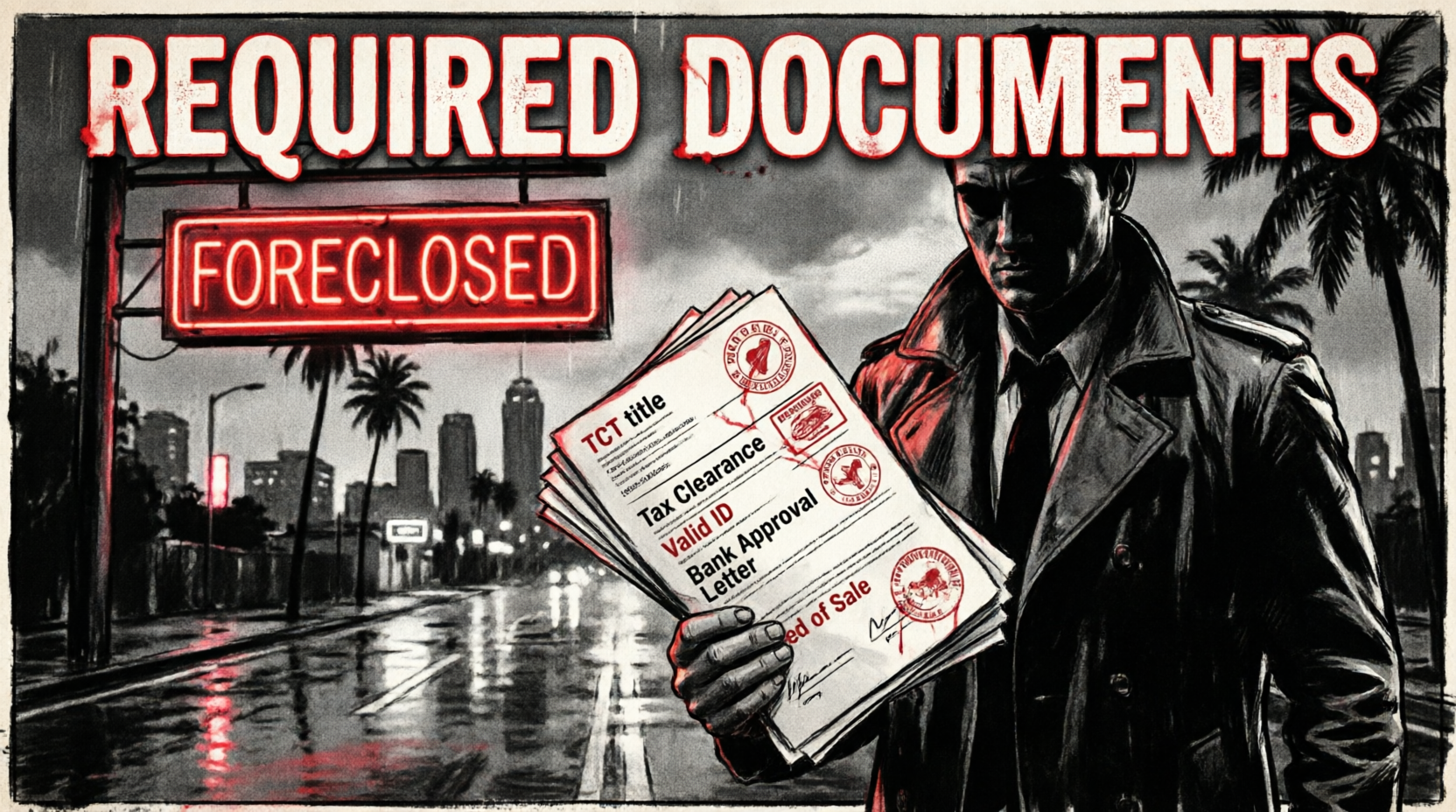
Buying a foreclosed property in the Philippines can be one of the smartest real estate moves you'll ever make. Prices are often 20% to 40% below market value, and banks like BDO, BPI, and Metrobank regularly update their listings with properties across the country. But before you get too excited about that discounted house and lot in Cavite or that condo unit in Quezon City, get your documents in order first.
Missing even a single requirement can delay your application — or cost you the property entirely. This guide walks you through the exact documents you need when buying a foreclosed property in the Philippines, whether you're paying in cash or applying for a bank loan.
Why Documentation Matters More with Foreclosed Properties
Unlike buying from a private seller or a developer, purchasing a foreclosed property means you're transacting directly with a bank or government financial institution. Banks are strict. They follow internal compliance procedures, BSP regulations, and legal due diligence protocols. Incomplete requirements means your application stops moving.
The good news is that the process is straightforward once you know what to prepare. The documents required for buying foreclosed properties in the Philippines generally fall into two categories: personal identification documents and financial or application documents. If you're applying for an in-house loan from the bank selling the property, you'll need a third set of documents for loan processing.
Basic Personal Requirements
Regardless of which bank you're buying from — BDO, BPI, Metrobank, PNB, Security Bank, or even government agencies like Pag-IBIG and GSIS — you will almost always need the following personal documents:
- Two valid government-issued IDs — Accepted IDs typically include your passport, driver's license, SSS/GSIS ID, PhilHealth ID, Voter's ID, or Philippine Identification System (PhilSys) ID. Both front and back copies are usually required.
- Tax Identification Number (TIN) — This is non-negotiable. You'll need your TIN for the Deed of Absolute Sale and for BIR tax clearances later in the process.
- Birth certificate (PSA-issued) — Required to verify your identity and civil status.
- Marriage certificate (PSA-issued) — Required if you are married, since your spouse's consent will be needed for the transaction.
- Community Tax Certificate (Cedula) — Issued by your local barangay or city hall. Minor requirement, but people forget this one often.
If you're a non-resident Filipino or an OFW purchasing from abroad, you'll also need a Special Power of Attorney (SPA) and proof of overseas employment.
Documents Needed for the Property Offer or Bid
When you formally express interest in a foreclosed property — whether through a bank's negotiated sale or a public auction — you typically need to submit a formal offer package. Here's what that usually includes:
- Letter of Intent (LOI) or Offer to Purchase — Some banks like BPI and Metrobank have their own standard forms for this. Others accept a simple written letter addressed to their acquired assets department.
- Duly accomplished application form — Available at the bank's branch or downloadable from their website. BDO's Foreclosed Properties page, for example, provides a downloadable buyer's form.
- Reservation fee or earnest money — This isn't a document per se, but the official receipt for your reservation payment becomes part of your file. Amounts vary — BPI may require as little as ₱10,000, while others set it at a percentage of the purchase price.
- Proof of billing address — A recent utility bill (MERALCO, Manila Water, etc.) in your name is the standard requirement.
Financial Documents for Loan Applications
Most buyers of foreclosed properties in the Philippines apply for an in-house loan offered by the selling bank. This is common with BDO's "Kabayan" program, BPI's home loan products, and Metrobank's acquired asset financing. For employed applicants, the financial document requirements typically include:
- Certificate of Employment (COE) — Must be recently issued, usually within three months. It should state your position, employment status, and monthly salary.
- Latest Income Tax Return (ITR) — BIR Form 2316 or 1700 — Most banks require the past one to two years of ITR, duly stamped by the BIR.
- Latest three to six months' payslips — Original copies are preferred. Banks use this to verify consistent income.
- Bank statements for the past three to six months — Your savings or checking account history showing regular deposits and financial stability.
If you are self-employed or a business owner, the requirements shift slightly:
- DTI or SEC registration of your business
- Mayor's Permit or Business Permit
- Audited Financial Statements for the past two years
- ITR for the past two years, BIR-stamped
- Bank statements for the past six months
Documents Related to the Property Itself
Before you finalize any purchase, personally verify the property documents. The bank should provide or allow you to check these:
- Transfer Certificate of Title (TCT) or Condominium Certificate of Title (CCT) — This confirms legal ownership. Request a certified true copy from the Registry of Deeds to make sure it's clean and free of adverse claims.
- Tax Declaration — Issued by the local assessor's office. This tells you the assessed value of the property and confirms the land classification.
- Real Property Tax (RPT) receipts — Verify that real estate taxes are updated. Outstanding RPT obligations can become your problem after purchase.
- Deed of Absolute Sale (after approval) — This is the key legal document transferring ownership from the bank to you. It will be notarized and eventually used to transfer the title to your name.
Before signing anything, hire a licensed real estate broker or lawyer to conduct a title verification at the Registry of Deeds. It costs a few hundred pesos and can save you from major headaches later.
After Purchase: Transfer Documents
Once the sale is completed, you'll need to process the transfer of title. This involves additional steps and documents:
- Payment of Capital Gains Tax (CGT) — 6% of the selling price or zonal value, whichever is higher. Usually paid by the seller (the bank), but confirm this in your contract.
- Payment of Documentary Stamp Tax (DST) — 1.5% of the transaction value.
- Transfer Tax — Paid to the local government unit (LGU). Rates vary per city or municipality.
- Registration Fee — Paid to the Registry of Deeds to officially transfer the title to your name.
Keep all official receipts. You'll need them when you register the new TCT under your name at the Registry of Deeds and update the Tax Declaration at the Assessor's Office.
Final Tips Before You Submit Your Documents
Here are a few reminders to keep your application on track:
- Prepare multiple photocopies of every document. Banks often ask
Browse Foreclosed Properties
Search thousands of listings from BDO, BPI, Metrobank, and more.
Browse All Listings →More Articles
-
What's the Process of Buying Foreclosed Property Step by Step?
May 17, 2026
-
How to Avoid Scams When Buying Foreclosed Property Online
May 16, 2026
-
Can Foreigners and OFWs Buy Foreclosed Properties in the Philippines?
May 16, 2026
-
How to Find a Licensed Real Estate Agent for Foreclosed Properties
May 16, 2026