May 16, 2026 · ForeclosedBahay Editorial
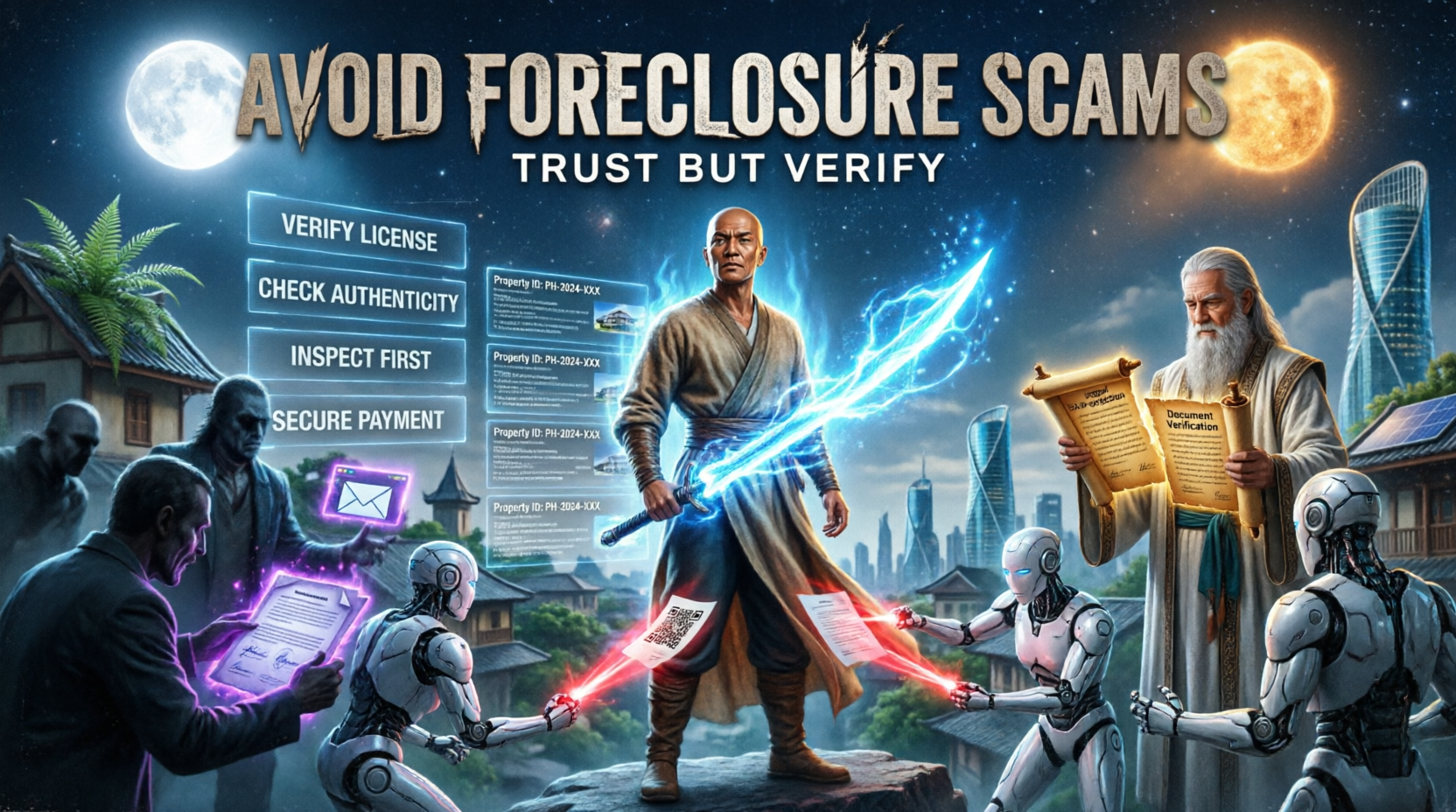
How to Avoid Scams When Buying Foreclosed Property Online
How to Avoid Scams When Buying Foreclosed Property Online
Buying a foreclosed property in the Philippines can be one of the smartest financial moves you'll ever make. Prices are often 20% to 40% below market value, and legitimate bank foreclosed properties are real, documented assets. But here's the hard truth: where there's a good deal, there are scammers waiting to take advantage of eager buyers.
Foreclosed property scams in the Philippines have gotten more sophisticated, especially as more people search for properties online. Whether you're a first-time buyer or a seasoned investor, knowing how to spot and avoid online property scams could save you hundreds of thousands — even millions — of pesos.
Let's break down exactly what you need to watch out for and how to protect yourself.
Why Foreclosed Properties Attract Scammers
The appeal of foreclosed properties is exactly what makes buyers vulnerable. When you see a house and lot in Quezon City listed at ₱1.5 million or a condo in Cebu at ₱800,000, your excitement can override your caution. Scammers know this. They create fake listings, impersonate bank representatives, and collect reservation fees from multiple victims for properties they don't own or have no authority to sell.
Social media marketplaces and online classified ads have made it even easier for fraudsters to post convincing fake listings with stolen photos and fabricated documents. This is why knowing how to verify a listing before you hand over a single centavo is absolutely critical.
Common Foreclosed Property Scams in the Philippines
Before we get to the tips, it helps to know what you're up against. Here are the most common schemes targeting Filipino property buyers online:
- Fake bank representatives: Scammers pose as agents of BDO, BPI, Metrobank, or other banks, using fake email addresses and forged documents to collect reservation fees.
- Double-sold properties: A fraudster collects deposits from multiple buyers for the same property, then disappears.
- Non-existent listings: Properties advertised online that don't exist, or exist but are not actually for sale.
- Unauthorized brokers: People who claim to represent a bank but have no legitimate authority to sell or negotiate on behalf of the institution.
- Fake titles and documents: Scammers present falsified Transfer Certificates of Title (TCT) or tax declarations to make a fraudulent sale appear legitimate.
Tip 1: Always Go Directly to the Bank's Official Website
This is the single most important rule. If you're interested in a BDO foreclosed property, go to bdo.com.ph and look for their acquired assets section. BPI lists their properties at bpi.com.ph. Metrobank has their own acquired assets page as well. The same applies to PNB, UnionBank, Landbank, and other major lenders.
Do not rely solely on listings you find through Facebook groups, third-party classifieds, or random websites claiming to sell bank properties. Cross-check every listing you find online against the official bank source. If a property appears on a third-party site but is nowhere on the bank's actual website, that's a red flag.
Tip 2: Verify the Identity of Anyone You're Dealing With
Legitimate banks have official contact numbers and email addresses — and their emails will always come from a verified corporate domain. A real BDO representative will have a @bdo.com.ph email address, not a Gmail or Yahoo account. If someone claiming to be a Metrobank officer contacts you from a personal email, stop all communication immediately.
Call the bank's official customer service hotline to verify if the person you're dealing with is an authorized representative. Ask for their employee ID or broker accreditation number. Accredited brokers in the Philippines should be registered with the Professional Regulation Commission (PRC) and should be able to show you their license.
Tip 3: Never Pay a Reservation Fee Without a Paper Trail
Scammers love cash payments and bank transfers to personal accounts. Before you pay anything — even a small reservation fee — make sure you are paying directly to the bank's official account, not to an individual's personal bank account.
Get a written acknowledgment receipt on official bank letterhead for any payment you make. Legitimate banks like BPI and BDO will issue official receipts through their property management or acquired assets departments. If someone is rushing you to pay quickly before "another buyer takes the property," that urgency is a manipulation tactic. Walk away.
Tip 4: Check the Title and Property Documents Yourself
Never take a seller's word for it when it comes to the property's legal status. Go to the Register of Deeds in the city or municipality where the property is located and request a certified true copy of the Transfer Certificate of Title (TCT) or Condominium Certificate of Title (CCT). This will confirm who the registered owner is.
You can also check the Bureau of Internal Revenue (BIR) for real property tax records and the local assessor's office to verify the property's declared value. If the title still shows the previous owner's name and not the bank's, be very cautious about proceeding without legal advice.
Tip 5: Visit the Property in Person Before Committing
Online photos can be outdated, edited, or completely stolen from other listings. Before you commit financially, visit the actual property. Bring someone you trust — ideally a licensed real estate broker or attorney. Check if the property is occupied, what condition it's in, and whether it matches the listing description.
Properties sold by banks like Metrobank and PNB are often sold "as-is, where-is," meaning you inherit whatever condition the property is in, including occupants who may refuse to leave. Seeing the property firsthand prevents costly surprises after the sale.
Tip 6: Use Trusted and Legitimate Property Platforms
One of the easiest ways to protect yourself from foreclosed property scams in the Philippines is to use platforms that gather verified listings from legitimate sources. Not all property websites are created equal — choose ones that pull listings directly from bank-verified sources and are transparent about where their data comes from.
Avoid deals you find through unverified Facebook pages, random Viber groups, or classified ads with no institutional backing. If there's no traceable organization behind the listing, the risk is simply too high.
Tip 7: Consult a Licensed Real Estate Professional
If you're serious about purchasing a foreclosed property, spend a little time and money consulting a PRC-licensed real estate broker or a real estate attorney. They can help you verify documents, negotiate with the bank, and catch red flags that you might miss on your own. This matters even more if you're buying property in an area you're not familiar with.
Quick Red Flag Checklist
- Prices that seem too good to be true — even for foreclosed properties, there are market limits
- Pressure to pay immediately or "reserve before someone else grabs it"
- Payment requests to personal accounts instead of official bank accounts
- No official receipts or documentation offered
- Representatives using personal email addresses (Gmail, Yahoo, etc.)
- No physical address or verifiable office for the seller or agent
- Listings not found on the bank's official website
Stay Smart, Stay Safe
Foreclosed properties remain one of the best opportunities for Filipino homebuyers and investors to get quality real estate at reduced prices. Banks like BDO, BPI, Metrobank, PNB, and Landbank regularly update their acquired assets portfolios with genuine, documented properties. The opportunity is real — but so are
Browse Foreclosed Properties
Search thousands of listings from BDO, BPI, Metrobank, and more.
Browse All Listings →More Articles
-
What's the Process of Buying Foreclosed Property Step by Step?
May 17, 2026
-
What Documents Do You Need to Buy a Foreclosed Property?
May 16, 2026
-
Can Foreigners and OFWs Buy Foreclosed Properties in the Philippines?
May 16, 2026
-
How to Find a Licensed Real Estate Agent for Foreclosed Properties
May 16, 2026