May 16, 2026 · ForeclosedBahay Editorial
What's the Difference Between Foreclosed Houses and Lots?
What's the Difference Between Foreclosed Houses and Lots?
If you've been browsing bank foreclosed properties in the Philippines, you've probably noticed that listings come in different types — some are houses, some are bare lots, and some are a combination of both. For first-time buyers, this can be confusing. Is a foreclosed house always better than a lot? What are you actually getting when you buy either one? And which one fits your budget and goals?
Let's break it down in plain terms so you can make a smarter decision before putting your hard-earned money on the line.
Understanding the Two Main Types of Foreclosed Property
When banks like BDO, BPI, Metrobank, Security Bank, and PNB acquire properties from borrowers who stopped paying their loans, they end up with a wide variety of real estate assets. These are called Real and Other Properties Acquired (ROPA) and are eventually sold to the public, often at significant discounts.
The two most common types of foreclosed property you'll encounter in the Philippines are:
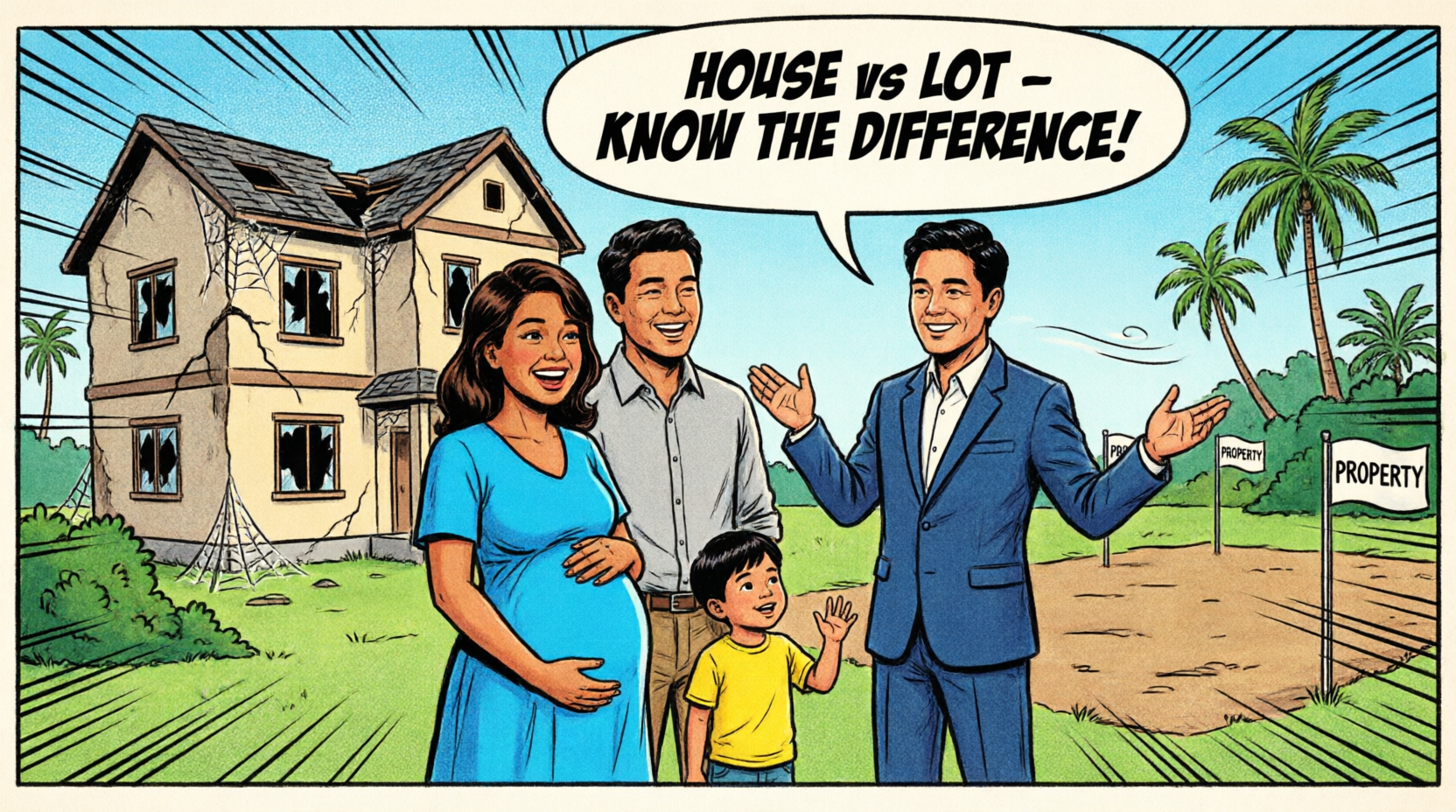
- Foreclosed Houses (or House and Lot) — Properties that come with an existing structure, typically a residential home. The land and the building are sold together.
- Foreclosed Lots — Raw or undeveloped land with no existing structure. You're buying the land only.
There's also a third variation — foreclosed condominiums — but for this article, we'll focus on the house vs. lot comparison since these are the most common foreclosed properties for sale across the country.
Foreclosed Houses: What You're Getting
A foreclosed house and lot means you're buying a property with an existing structure on it. This could be a single-family home in a subdivision in Cavite, a townhouse in Quezon City, or a bungalow in Cebu. On paper, this sounds like the more complete deal — and in many cases, it is.
But there are things you need to watch out for:
- Condition of the structure varies widely. Some foreclosed homes are well-maintained, while others may have been abandoned for years. Expect anything from minor wear and tear to serious structural damage, missing fixtures, or even squatter occupancy.
- You may inherit renovation costs. Before bidding or buying, factor in the cost of repairs. A house that looks cheap on paper can become expensive once you account for electrical rewiring, plumbing repairs, or roof replacement.
- Occupancy issues are possible. In some cases, the previous owner or informal settlers may still be living on the property. Eviction can be a legal and emotional process that takes time.
- Move-in potential is higher. If the property is in good shape, you can move in sooner — or rent it out faster — compared to a bare lot where you'd have to build from scratch.
Banks like BDO and BPI often sell foreclosed houses at negotiated prices, and some even offer in-house financing at low interest rates for ROPA properties, so you don't have to go through a separate lender.
Foreclosed Lots: What You're Getting
A foreclosed lot is raw land — no house, no building, just the land itself and whatever title comes with it. This could be a residential lot inside a subdivision in Laguna, a commercial lot along a highway in Bulacan, or an agricultural lot in the province.
Buying a foreclosed lot has its own advantages and challenges:
- Lower entry price. Foreclosed lots are generally cheaper than house-and-lot packages because there's no structure involved. If your budget is tight, a lot may be a more accessible way into property ownership.
- You build what you want. With a bare lot, you decide what goes up and how it's designed — ideal if you have specific needs or want to build your home from the ground up.
- Budget for construction on top of the lot price. Building a house in the Philippines can cost anywhere from ₱15,000 to ₱30,000 per square meter or more, depending on finishes and materials. That's a significant additional expense many buyers underestimate.
- Check land use and zoning. Not all lots are the same. A lot zoned for agricultural use cannot automatically be converted for residential construction. Always verify the classification with the local government unit (LGU) and check if the land is in a flood-prone or restricted area.
- Idle land tax applies. If you buy a lot and leave it undeveloped for an extended period, you may be charged idle land tax under the Local Government Code — an extra cost many buyers overlook.
Metrobank and Security Bank, for example, regularly list foreclosed lots in their ROPA portfolios ranging from small residential lots in Metro Manila suburbs to larger agricultural parcels in the provinces. These can be good investment opportunities if you do your due diligence.
Key Differences at a Glance
- Price: Foreclosed lots are generally more affordable upfront, but total costs go up once you build. Foreclosed houses cost more initially but may be usable sooner.
- Condition risk: Houses come with structural risks you need to assess. Lots require checking soil quality, legal land use, and access to utilities.
- Time to use: A move-in-ready foreclosed house can be occupied or rented out sooner. A lot requires time and money to develop before it generates any value.
- Investment flexibility: Lots give you more freedom to develop as you see fit. Houses can generate rental income faster if the property is in livable condition.
- Legal concerns: Both types require title verification, but houses may carry additional issues like occupancy disputes and unpaid association dues.
Practical Tips Before You Buy Either Type
- Always do an ocular visit. Never buy a foreclosed property without seeing it first. Go there personally, ideally with a licensed engineer or architect who can assess the condition.
- Verify the title. Work with a licensed broker or lawyer to check the Transfer Certificate of Title (TCT) or Original Certificate of Title (OCT) at the Registry of Deeds. Make sure it's clean — no liens, encumbrances, or adverse claims.
- Check for unpaid taxes. Real property taxes (amilyar) must be settled. Ask the bank for a tax clearance or verify with the city or municipal assessor's office.
- Know the payment terms. Banks like PNB and China Bank sometimes offer flexible installment schemes or cash discounts on ROPA properties. Ask about these before assuming you need to pay in full.
- Budget for all transaction costs. Capital gains tax, documentary stamp tax, transfer tax, and registration fees add roughly 8–10% to the purchase price. Plan for this in advance.
So Which One Should You Buy?
Honestly, it depends on what you're trying to accomplish. If you need a place to live soon or want to collect rental income right away, a foreclosed house and lot — assuming it's in decent condition — is probably the better pick. If you're playing the long game, want to build on your own terms, or have a limited upfront budget, a foreclosed lot might make more sense. Either way, both types can give you good value when you buy with your eyes open.
Go in with clear goals, a realistic budget, and enough due diligence to avoid costly surprises. Foreclosed properties
Browse Foreclosed Properties
Search thousands of listings from BDO, BPI, Metrobank, and more.
Browse All Listings →More Articles
-
What's the Process of Buying Foreclosed Property Step by Step?
May 17, 2026
-
How to Avoid Scams When Buying Foreclosed Property Online
May 16, 2026
-
What Documents Do You Need to Buy a Foreclosed Property?
May 16, 2026
-
Can Foreigners and OFWs Buy Foreclosed Properties in the Philippines?
May 16, 2026