May 16, 2026 · ForeclosedBahay Editorial
What Returns Can You Expect From Foreclosed Property Investment?
What Returns Can You Expect From Foreclosed Property Investment?
Foreclosed property investment has become one of the most talked-about strategies among Filipino investors who want to grow their wealth through real estate. And honestly, it makes sense — buying a bank-acquired asset at a big discount sounds like a direct path to profit. But before you wire your downpayment to BDO or line up for a BPI foreclosed property auction, ask yourself the real question first: what kind of returns can you actually expect?
The honest answer is that foreclosed property ROI in the Philippines can range from modest to genuinely impressive — depending on how well you buy, what you do with the property, and how long you're willing to wait. Let's break it down practically.
Why Foreclosed Properties Offer Better Starting Returns
Every real estate investment return starts with the purchase price. With foreclosed properties, you're often buying below market value — sometimes 20% to 40% lower than comparable properties in the same area. Banks like Metrobank, BDO, BPI, PNB, and UCPB are not in the business of managing real estate. They want to recover their loan balance, not squeeze out maximum profit. That urgency creates an opening for buyers.
Say a residential lot in Cavite has a market value of ₱2,000,000 but a bank is offering it at ₱1,400,000 through their acquired assets program. You've already built in a potential ₱600,000 in equity before touching a single nail. That built-in discount is exactly why foreclosed property ROI in the Philippines tends to beat buying brand-new from a developer at full list price.
Two Main Ways to Earn Returns
When investing in foreclosed real estate, your returns will generally come from two sources:
- Capital appreciation — the property increases in value over time, and you sell it at a profit
- Rental income — you lease the property to tenants and earn monthly cash flow
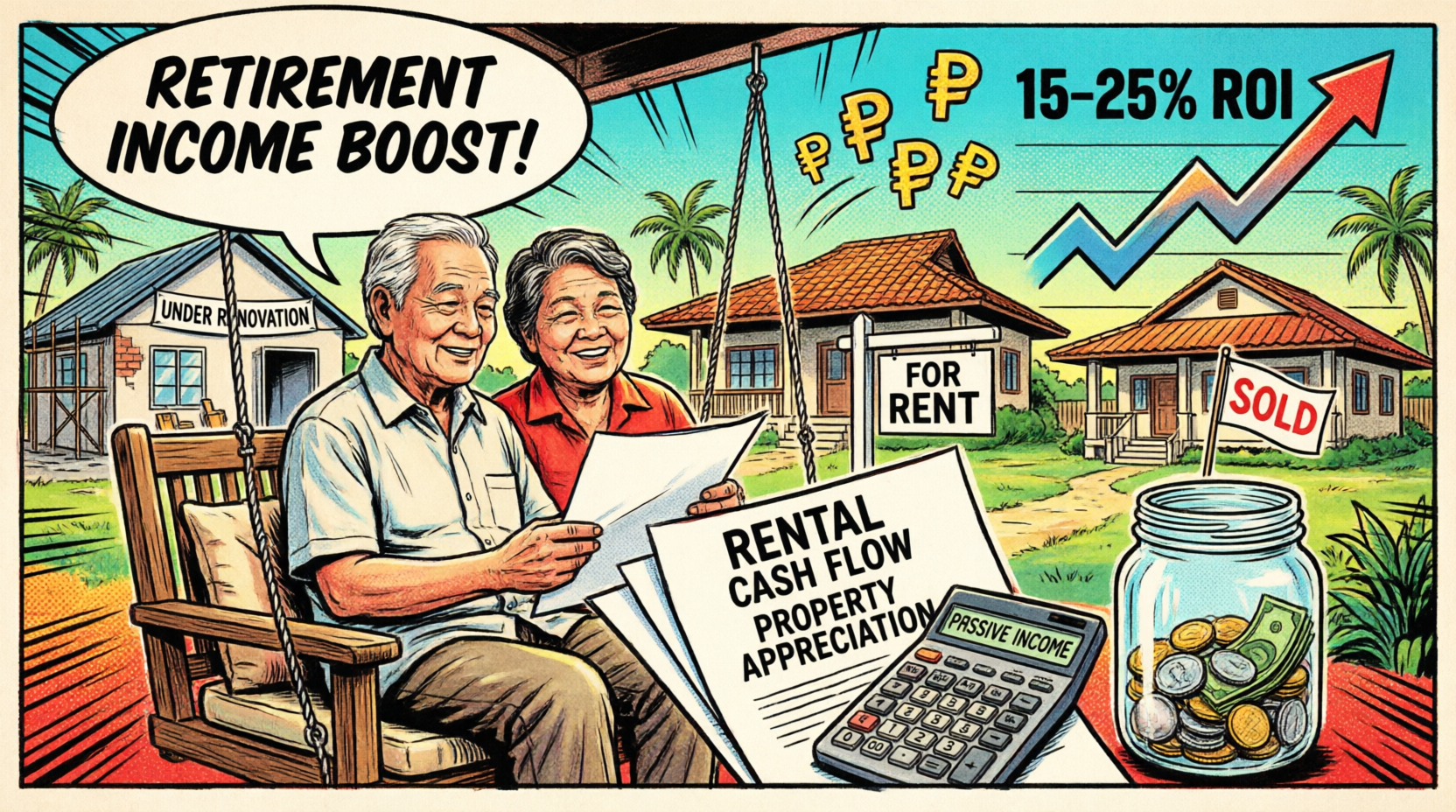
Many Filipino investors combine both: rent the property out while holding it, then sell when values have gone up enough. This works especially well in high-growth corridors like Laguna, Bulacan, Cebu, and the outskirts of Metro Manila, where expressways and new commercial developments keep pushing property values up.
Capital Appreciation: What's Realistic?
Philippine real estate has historically appreciated at around 5% to 10% per year in established urban areas, and even higher near infrastructure projects. When you buy a foreclosed property below market value, your effective appreciation rate from day one already gets a boost from that initial discount.
Here's a simple example. Say you purchase a foreclosed townhouse in Bacoor, Cavite from a Landbank auction for ₱1,800,000. The fair market value at the time is ₱2,400,000. You hold it for five years, and the area appreciates at a conservative 7% per year. By year five, that property could be worth roughly ₱3,370,000. Your total gain from the original purchase price: over ₱1,500,000 — more than 83% on your initial investment, before counting any rental income along the way.
Of course, you need to account for all the costs: transfer taxes, documentary stamps, registration fees, capital gains tax when you sell, and any repairs the property needed. These are real numbers that belong in your foreclosed property ROI calculations.
Rental Income: Numbers to Expect
If you plan to rent out the property, the number to watch is gross rental yield — your annual rental income divided by the purchase price. In Metro Manila and key provincial cities, residential rental yields typically run between 4% and 7% gross annually, depending on location and property type.
Because you bought below market value, your yield is naturally higher than if you paid full price. A foreclosed condo unit in a secondary business district purchased for ₱1,500,000 that rents for ₱12,000 per month earns ₱144,000 a year — a gross yield of 9.6%. That's a solid number.
Net yield will be lower after you subtract property taxes, association dues, occasional vacancy, maintenance, and property management fees if you hire someone. A realistic net yield after expenses usually falls between 4% and 6%, which still beats time deposits and holds up well against many equity funds — especially when you add long-term appreciation on top.
Factors That Will Make or Break Your Returns
Not every foreclosed property is a good deal. Here are the things that will determine whether your investment pays off or leaves you frustrated:
- Location above everything else. A discounted property in a low-demand area may sit empty or barely gain value. Look for properties near schools, commercial centers, hospitals, or major road networks.
- Condition of the property. Some foreclosed properties need serious work — roof repairs, plumbing overhaul, repainting, structural fixes. Always estimate renovation costs before you commit. A property priced at ₱900,000 that needs ₱300,000 in repairs is a very different investment than it first appears.
- Title clarity. Make sure the title is clean, updated, and free of encumbrances. Banks like BPI and BDO typically handle this before listing, but always have a licensed lawyer or broker verify it yourself.
- Occupancy status. Some foreclosed properties are still occupied by the previous owner. Eviction proceedings in the Philippines take time and money. Factor this into your holding cost calculations.
- Financing terms. Buying on in-house installment from the bank — which many Philippine banks offer — means your cash-on-cash return looks very different from an all-cash purchase. Run the numbers carefully either way.
Typical Returns Summary: A Quick Reference
- Immediate equity gain from discount: 20% to 40% below market value in many cases
- Annual capital appreciation: 5% to 10% in urban and high-growth areas
- Gross rental yield: 6% to 10% when purchased below market value
- Net rental yield after expenses: 4% to 6%
- Total return over 5 years (appreciation + rental): 60% to over 100% depending on location and strategy
Practical Tips Before You Invest
- Do a Zonal Valuation check with the BIR and compare it against current market prices in the area before making any offer.
- Attend bank auction briefings — BDO, Metrobank, and PNB regularly post their acquired asset listings and hold public auctions with clear terms.
- Work with a licensed real estate broker who knows foreclosed properties. Their fee is worth it.
- Keep at least 10% to 15% of the purchase price in reserve for taxes, fees, and unexpected repairs.
- Visit the property in person before bidding. Bank listing photos don't always show the full picture.
The Bottom Line on Foreclosed Property ROI in the Philippines
Foreclosed property investment in the Philippines can deliver returns that beat many traditional investment options — but only when you do your homework. The discount you get at purchase is your biggest advantage. Protect it by carefully looking at location, property condition, title status, and total acquisition costs. Whether you plan to flip, rent, or hold long-term, the numbers can work strongly in your favor when you go in prepared.
Browse Foreclosed Properties
Search thousands of listings from BDO, BPI, Metrobank, and more.
Browse All Listings →More Articles
-
What's the Process of Buying Foreclosed Property Step by Step?
May 17, 2026
-
How to Avoid Scams When Buying Foreclosed Property Online
May 16, 2026
-
What Documents Do You Need to Buy a Foreclosed Property?
May 16, 2026
-
Can Foreigners and OFWs Buy Foreclosed Properties in the Philippines?
May 16, 2026