May 16, 2026 · ForeclosedBahay Editorial
Can You Flip Foreclosed Properties for Profit in the Philippines?
Can You Flip Foreclosed Properties for Profit in the Philippines?
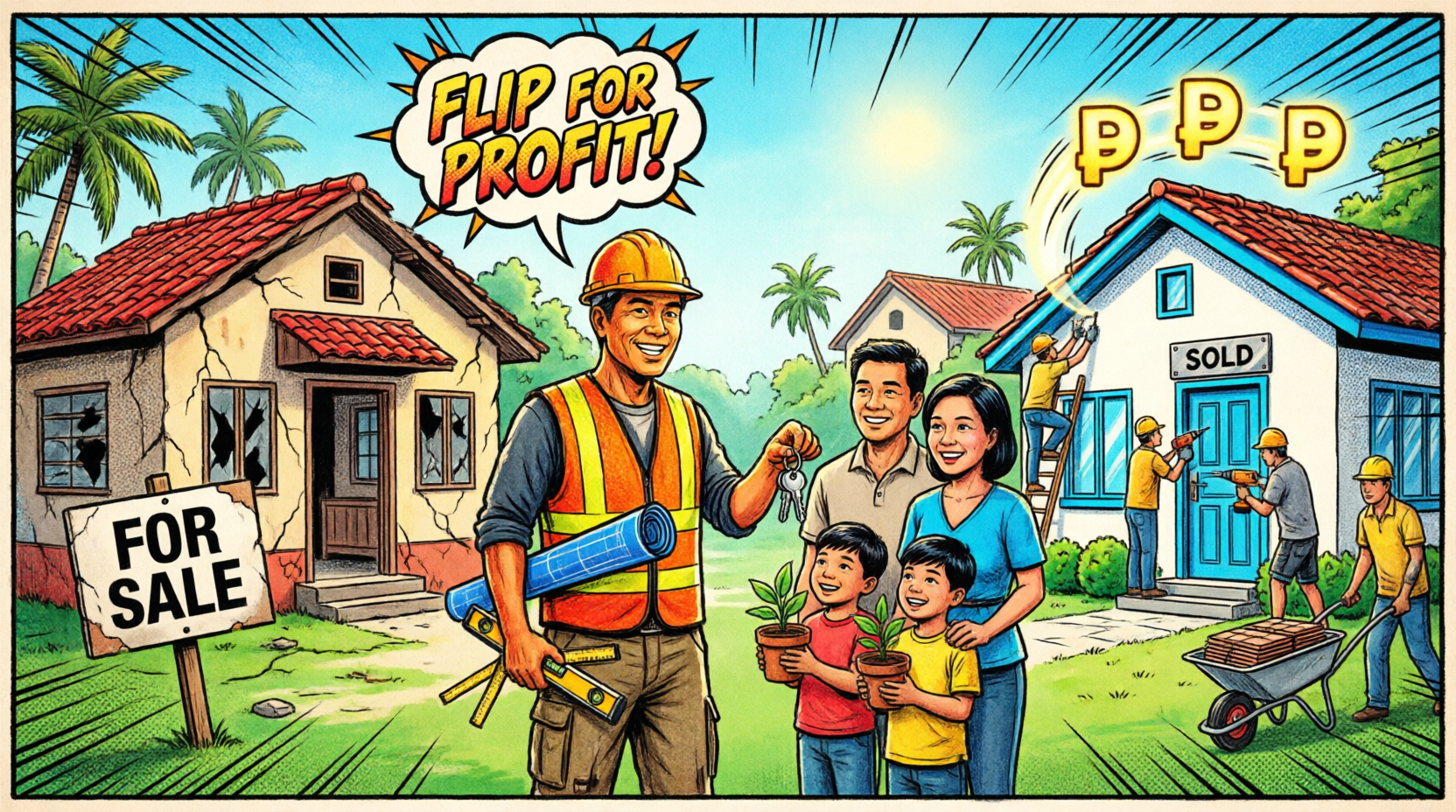
Real estate flipping has picked up a lot of followers here in the Philippines. You've probably seen it on social media — someone buys a run-down property cheap, renovates it, and sells it a few months later for a good profit. But can you actually flip foreclosed properties in the Philippines and make real money doing it? The short answer is yes — but only if you go in knowing exactly what you're getting into.
Let's walk through what you need to know before you start buying bank foreclosed properties to flip for profit.
Why Foreclosed Properties Are Attractive for Flipping
Foreclosed properties are repossessed by banks when borrowers stop paying their mortgage. Banks like BDO, BPI, Metrobank, PNB, and Landbank end up holding hundreds — sometimes thousands — of these properties. Because banks are in the business of lending money, not managing real estate, they want these assets off their books fast. That urgency usually means prices below market.
That's where a smart flipper sees the opening. Buy a property at 20% to 40% below market value and you already have a built-in margin before you even touch a paintbrush. Add a targeted renovation, and you can sell at or above market value and pocket the difference.
How Real Estate Flipping Works in the Philippine Context
The basic formula is straightforward:
- Buy low — acquire the foreclosed property below market value
- Improve — renovate or repair to increase the property's appeal and value
- Sell high — sell the property at a profit before carrying costs eat into your margin
In practice, Filipino flippers usually go after foreclosed houses and lots in established subdivisions in Metro Manila, Cebu, Davao, and other urban centers where buyers are already lined up. A foreclosed townhouse in BF Homes Parañaque or Filinvest in Alabang, for example, can be bought at a discount and resold quickly after repairs — because buyers already trust those neighborhoods.
Some investors also target foreclosed condominiums in Makati, Quezon City, or BGC, though those come with extra considerations like association dues and renovation restrictions.
Where to Find Foreclosed Properties for Flipping
Major banks in the Philippines regularly publish their acquired asset listings. Here's a quick rundown:
- BDO Unibank — One of the biggest sources of foreclosed properties, with listings across Luzon, Visayas, and Mindanao
- BPI (Bank of the Philippine Islands) — Regularly holds public auctions and negotiated sales of acquired assets
- Metrobank — Lists properties on their website and through accredited brokers
- PNB (Philippine National Bank) — Offers foreclosed real estate across various price points
- Landbank of the Philippines — Often has agricultural and residential properties at competitive prices
- RCBC and Security Bank — Smaller portfolios but worth checking for deals
Rather than checking each bank's website one by one, platforms like ForeclosedBahay.com pull these listings together so you can search, compare, and shortlist properties in one place — and save yourself hours of research.
Practical Tips for Flipping Foreclosed Properties in the Philippines
Flipping sounds exciting, but the profit doesn't come automatically. Here are practical tips that can make or break a deal:
- Do your due diligence on the title. Always verify the Transfer Certificate of Title (TCT) or Condominium Certificate of Title (CCT) at the Registry of Deeds. Some foreclosed properties carry liens or encumbrances that can eat into your profits or cause delays you didn't plan for.
- Compute all costs before you buy. Your profit margin has to account for the purchase price, transfer taxes, capital gains tax (6% of selling price or zonal value, whichever is higher), documentary stamp tax, registration fees, renovation costs, holding costs like real property tax and association dues, and broker's commission if you sell through an agent. Miss even one of these and a profitable deal can turn into a loss.
- Visit the property in person. Bank listings often show very few photos. A property may look decent in pictures but have major structural problems, squatter occupants, or hidden damage. Always inspect before making any offer.
- Check for occupants. Some foreclosed properties still have the former owners or tenants inside. Eviction proceedings can take months or years, which will seriously affect your timeline and your numbers.
- Go for cosmetic repairs, not structural overhauls. The best flips are properties that look bad but are structurally sound. Repainting walls, replacing fixtures, re-tiling floors, and cleaning up the garden can add a lot of perceived value at relatively low cost.
- Know your buyer. Are you targeting OFW families, young professionals, or investors? Your target buyer determines which renovations matter and at what price you should sell.
- Work with a licensed real estate broker. A PRC-licensed broker who knows the local market can help you price the property correctly and connect you with qualified buyers faster.
What Returns Can You Realistically Expect?
Experienced Filipino real estate flippers usually aim for a net profit of 15% to 30% on total investment — purchase price plus renovation costs. On a property bought for ₱2 million, that could mean a net gain of ₱300,000 to ₱600,000 after all costs. Not bad for a project that might take 3 to 6 months.
That said, flipping is not a guaranteed windfall. The Philippine real estate market moves slowly in certain locations or price brackets. Properties priced above ₱5 million tend to sit longer unless they're in highly desirable areas. Timing matters too — the resale market generally moves faster in the first and third quarters of the year.
Common Mistakes First-Time Flippers Make
- Overpaying for the property because they got too attached to its potential
- Underestimating renovation costs — always add a 15% to 20% buffer to your budget
- Ignoring holding costs — every month the property sits unsold is money out of your pocket
- Forgetting about taxes — capital gains tax alone can take a big bite out of your net profit
- Skipping legal checks on the title and ownership history
Is Flipping Foreclosed Properties Right for You?
Flipping foreclosed properties in the Philippines can work very well if you have the capital, the patience for due diligence, and a reliable network of contractors, brokers, and legal advisors. It's not a get-rich-quick scheme — it's a business. Run it like one, and the profits will follow.
The good news is that demand for affordable and mid-range housing in the Philippines stays strong, which means a well-renovated foreclosed property in the right location will always find a buyer.
Ready to find your next flip? Browse hundreds of bank foreclosed property listings across the Philippines on ForeclosedBahay.com. From BDO to BPI to Metrobank and beyond, we consolidate the latest foreclosed listings so you can find underval
Browse Foreclosed Properties
Search thousands of listings from BDO, BPI, Metrobank, and more.
Browse All Listings →More Articles
-
What's the Process of Buying Foreclosed Property Step by Step?
May 17, 2026
-
How to Avoid Scams When Buying Foreclosed Property Online
May 16, 2026
-
What Documents Do You Need to Buy a Foreclosed Property?
May 16, 2026
-
Can Foreigners and OFWs Buy Foreclosed Properties in the Philippines?
May 16, 2026